Scooter Accessories for Children
A scooter arrives almost ready to ride right out of the box—only the fork needs to be turned and the handlebar mounted. Accessories usually only become a topic after a few months: the griptape has worn smooth, the brake responds later, or the wheels run unevenly. For a piece of sports equipment used daily, this is the normal course of things.
Chilli has been around since 2010, and in Swiss hands since 2019. We carry individual spare parts for every model and run our own workshop in Küsnacht ZH.
Which accessories does my child really need?
At the beginning, it’s just two things. The rest comes later, usually all by itself.
Helmet and knee pads—from the very first ride
A helmet is mandatory. It must comply with the EN 1078 standard and fit the head circumference, not the age. Knee and elbow pads are optional on the yard, but standard in the skate park.
After three to six months
Those who ride regularly usually replace three parts after the first half-year: griptape, brake, and—depending on the surface—the wheels. A child who rides daily brakes several hundred times a week. The brake is a metal strip that mechanically presses onto the wheel, generating heat—do not touch! Keeping an eye on these three parts means you won't have to replace the entire scooter.
Upgrades when the child starts riding seriously
Larger wheels with an aluminum core, more comfortable handle grips, a taller handlebar, pegs: as long as the child is still learning how to roll and brake, these parts won't improve anything. They become interesting when freestyle park riding comes into play and the setup needs to match the riding style.
|
Feature / Part |
Beginner |
Advanced |
Freestyle Park |
|
Helmet (EN 1078) |
Mandatory |
Mandatory |
Mandatory, often an entry requirement |
|
Knee & Elbow Pads |
Recommended |
Recommended |
Strongly recommended |
|
Griptape |
Factory installed |
First change due |
2 to 3 times per year |
|
Brake |
Factory installed |
First change likely |
Can be replaced with a fender |
|
Wheels |
Factory installed |
Check for wear |
Aluminum core, 110 to 120 mm |
|
Grips |
Factory installed – check bar ends |
Replace if heavily worn – check bar ends |
XL grips or preferred grips |
|
Replacement Axles |
Not necessary |
Useful |
Belong in the backpack |
|
Scooter Stand |
Useful |
Useful |
Not relevant |
Safety Equipment for Children
Helmets and the Right Size by Head Circumference
Helmet sizes are based on head circumference, not birth year. There are often several centimeters of difference between two children of the same age.
Measure around the head using a measuring tape, about one finger's width above the ears and across the widest part of the forehead and the back of the head. The age specifications in the table serve only as a rough guideline.
|
Age (Guideline) |
Head Circumference |
Helmet Size |
|
Approx. 6 to 9 years |
53 to 55 cm |
S |
|
Approx. 9 to 12 years |
55 to 58 cm |
M |
|
From approx. 12 years |
58 to 61 cm |
L |
A helmet fits correctly if it cannot be shifted while the chin strap is unbuckled, and the edge ends approximately two fingers' width above the eyebrows.
Which standard needs to be observed?
EN 1078 is the European standard for helmets for cyclists, skateboarders, and roller skaters. Among other things, shock absorption, field of vision, harness system, and fastening devices are tested, as summarized by the Deutsche Verkehrswacht for common helmet standards. A helmet lacking this specification is unsuitable for scooters, regardless of how sturdy it looks.
Knee and Elbow Pads
Knee and elbow pads primarily prevent scrapes and bruises. These are rarely dramatic, but they often lead to a child refusing to ride again after their first fall.
In freestyle parks, the operator's house rules apply, almost always prescribing a helmet. The Swiss Council for Accident Prevention (BFU) additionally recommends a complete combination of helmet, wrist, elbow, and knee protection for freestyle parks. Wet facilities should not be ridden at all.
When a helmet must be replaced
A helmet must be replaced after any significant impact/fall onto it, even if no damage is visible from the outside. The EPS foam absorbs energy by permanently deforming, and this deformation usually remains invisible under the outer shell. Stiftung Warentest points out regarding children's helmets that structural damage cannot be reliably detected with the naked eye.
Regardless of falls, the material ages. UV radiation, heat in cars, sweat, and cleaning agents make the foam brittle. A helmet should therefore be replaced after about five years, even if worn infrequently. A ten-year-old helmet from the basement that an older sibling once wore no longer provides reliable protection.
Wheels for Children's Scooters
Wheel Sizes: 100, 110, and 120 mm Compared
The model dictates the wheel size because it must fit the fork and the deck. For our models:
- The 3000 runs 100 mm.
- The Base, Reaper, and 5000 run 110 mm.
- The Reaper Reloaded runs 120 mm.
- The Wave Track runs 150 mm.
A larger wheel rolls faster and smoother over bumps, while a smaller wheel feels more nimble. For a child under about eight years old, 100 to 110 mm is suitable; 110 and 120 mm become interesting once they move to the freestyle park. On some models, you can upgrade to the next size up, but you must check if it fits the brake and the fork. This works on the 3000, for example: it comes with 100 mm out of the box and runs on 110 mm with the larger brake.
Fat wheels with a 120 mm diameter and a wider contact surface (27 mm instead of the usual 24 mm) require additional space in the fork and do not fit every deck or fork.
Choosing the Right Hardness Level
The durometer rating is indicated on the A-scale on the wheel or in the wheel's specifications. Stunt scooters typically run 88A to 90A, whereas kick scooters and kickboards are significantly softer at 82A to 85A. Our complete models come factory-equipped with 88A.
Soft wheels provide more grip and absorb cracks in the asphalt, but are worn out after one season. Hard wheels last longer and slide controllably on smooth concrete. For the skatepark, you shouldn't go below 88A; for rough sidewalks, the softer end of the stunt range is the better choice.
Aluminum Core vs. Plastic Core
The core carries the load and holds the polyurethane (PU) tread. An aluminum core does not deform under jumping impact. A plastic core is lighter and cheaper, but gives way under hard landings, which can cause the tread to separate from the core. For kids riding to school, plastic is fine. As soon as curbs and ramps are involved, an aluminum core is the wiser purchase. Our complete scooters are therefore fully equipped with aluminum cores.
How to Recognize Worn-Out Wheels
- Flatspots: Flat areas on the tread caused by hard lock-up braking; the scooter rolls noticeably bumpy.
- Uneven wear: Usually on one side because the child stands at a slight angle on the deck.
- Visible core: If the edge of the aluminum core shines through the PU tread, the wheel must be replaced immediately.
To test, spin the wheel with your hand. If it wobbles laterally or stops after a few turns, the wheel or the bearing is due for replacement. For a safe riding feel, we always recommend replacing both wheels at the same time and not attempting to change the ball bearings inside the wheel yourself.
Is a Bearing Upgrade Worth It for Children?
Usually not. Our complete scooters are factory-fitted with ABEC-9 bearings, and the ABEC rating says little about durability in stunt riding anyway: it describes manufacturing tolerances for high rotational speeds, not impact resistance.
What destroys bearings for kids is moisture and sand. A new bearing in a dirty wheel will last just as short a time as the old one, which is why proper cleaning and maintenance of the wheels and bearings takes priority over any upgrade.
Griptape for Children's Scooters
Griptape Sizes and Deck Matching
Griptape is not a universal product. It is precut to match the shape of the deck so that it aligns cleanly at the neck and deck. Our precut tapes range between approx. 45 and 55 cm depending on the model and are categorized by model names; the centimeter specifications can be found in the specifications.
When repurchasing, the model name is a more reliable guide than the deck dimensions. A universal sheet works as well, but must be cut to size yourself and needs to be long and wide enough.
Replacing Griptape Step-by-Step
The replacement takes about 10 minutes and requires a cutter knife and a hairdryer:
- Heat the deck: Pass over the surface with the hairdryer to loosen the adhesive.
- Peel off old tape: Lift at one corner and pull off in one swift motion.
- Remove adhesive residue: Dissolve with rubbing alcohol or white spirit and let the deck dry.
- Apply new griptape: Position centered, peel off the protective backing only halfway, and press down from the middle outwards.
- Trim excess: Cut from bottom to top using the cutter, holding the blade flat.
- Finishing touches: Smooth out air bubbles with heat from the hairdryer; do not slice open.
Replacement Interval and Warning Signs
Griptape is worn out when the grit on the standing area has become smooth. Rub your flat hand over the deck surface: wherever it feels like paper instead of sandpaper, shoe grip is lost. With daily riding, this happens after four to six months. Bubbles and peeling edges are a second reason to replace it, as shoes can get caught on them.
Brakes, Grips, and Clamps
The Brake
Experienced riders rarely brake, and prefer using their foot—similar to skateboarding. Children brake constantly because they regulate speed using the brake rather than their riding line. As a result, the flex brake on a child's scooter usually wears out before the griptape.
Note that it is a mechanical brake that gets hot when engaged and radiates heat accordingly. Keep in mind that this happens with all brakes, and there is no mechanical brake that doesn't heat up.
You can tell the brake needs replacement by three signs:
- The brake rests against the wheel in its neutral position instead of hovering above it.
- The braking distance becomes longer.
- The metal plate is visibly thin at the contact point.
Replacement brakes are available to fit wheel sizes of 100 mm, 110 mm, and 120 mm. Replacing it is quite simple.
Grips, Size, and How to Avoid Blisters
Grips are usually only replaced when they tear. Yet, they are the second point of contact on the scooter. Handles should be thick enough so that the fingers enclose them comfortably without pressing fingertip ends hard into the palm. Grips that are too thin force a tight grip, which can cause blisters.
If your child gets blisters on their palms after every long session, new XL grips or Morphing Handles might help. Bar ends are mandatory because they seal the open ends of the handlebar tube; these must also be checked regularly.
Single, Double, or Triple Clamp
The clamp connects the handlebar to the fork; the number of bolts determines clamping force. For beginner and all-round setups, a 2-bolt clamp (as installed on the Base and Reaper Reloaded) is sufficient. The 3-bolt clamp on the Reaper distributes force across three points. More bolts mean more weight and are only beneficial when hard landings enter the picture.
If the handlebar comes loose, the clamp itself is almost never the issue—it's usually a bolt that was tightened too loosely or compression that isn't tensioned correctly. Furthermore: the more bolts there are, the more likely it is an SCS compression system. Since SCS needs a certain overall length to function, it almost always uses 3–4 bolts, whereas HIC uses 2–3.
Do Third-Party Accessories Fit a Chilli?
Partially. Wheels are largely interchangeable as long as the diameter matches and the wheel fits into the fork. Griptape fits if you trim it yourself. Grips fit almost always; however, with Y-bars, they might end up a bit long and need trimming.
Anything related to compression is critical. Clamps, forks, bars, and compression systems are matched to one another, and millimeters decide whether the handlebar clamps securely. You will not be able to reliably install a third-party handlebar with a different tube diameter or without a suitable HIC slit at the bottom into our HIC systems.
So feel free to mix and match wheels, but stick to original parts or seek advice regarding compression.
Compression Systems Explained Simply
Compression provides the preload that holds the handlebar, fork, and headset together. Without it, the steering develops play and cracks upon landing.
In HIC, an shim sits inside the top of the fork, the handlebar is clamped via the clamp, and pulled against the headset via a top bolt. In SCS, the clamp sits over the fork, and an internal compression plate inside the clamp is bolted into the fork.
In practice: if the handlebar wobbles, the clamp isn't necessarily loose. Often, the compression bolt beneath the top cap inside the bar simply needs tightening. Our children's models consistently run HIC (as Universal HIC or Chilli Spider HIC), and occasionally SCS.
Growing with the Rider: Accessories by Age and Body Size
Finding the Matching Scooter Size
A stunt scooter fits when the handlebar ends roughly at hip height. Too high means bent arms and less control; too low means a hunched posture. The assignment of height, age, and handlebar height can be found in our sizing chart in the scooter overview.
Rough guide:
- Up to ~1.30 m: 3000
- Between 1.30 m and 1.50 m: Base and Base S
- Above that: Reaper and 5000
Swap the Bar Instead of Buying a New Scooter
Children grow faster than a deck wears out. Therefore, an outgrown scooter doesn't need to be fully replaced. Usually, only the handlebar is too small and can be replaced individually. The deck, fork, wheels, and brake stay, saving about half the cost of a new complete scooter.
Which bars fit your model is listed under spare parts. However, this swap no longer helps if the deck has also become too short and both feet can no longer fit behind one another.
From the School Run to the Freestyle Park: Setup Changes
In the freestyle park, full protective gear is often added instead of just a helmet, along with harder wheels with aluminum cores. Checking bar ends and retightening all bolts is essential before the first session. Afterwards, appropriate care, maintenance, and cleaning ensure no bearings seize up.
Maintenance and Care of Children's Scooters
Tools Parents Need at Home
An Allen key set (3 to 6 mm) covers clamp, compression, and brake, plus a 13 mm socket wrench for axle nuts, and a cutter knife for griptape. More important than any specialty tool is the habit of retightening everything after the first session on a new or modified scooter, as connections settle under load.
If something doesn't fit or a part won't come loose, the scooter can always be repaired by us in Küsnacht ZH.
Scooter Stands and Storage
A scooter leaning against a wall falls over, causing scratches, gradual bending, or damaged bar ends. A stand prevents this and costs little.
For storage: dry, not right next to a radiator, and ideally not permanently in direct sunlight. The hallway is better than the garden; the basement is better than the balcony.
Cleaning, Wetness, and Winter Storage
After riding in the rain, wipe the scooter dry, especially around axles and bearings. Water ingress washes out grease and causes bearings to rust. Clean griptape using a dry brush—never wet!
For winter, it's sufficient to store the scooter clean and dry indoors and retighten all bolts in spring.
What Do Children's Scooter Accessories Cost?
The following price ranges refer to certified quality goods, not discount sets lacking safety standards.
|
Package |
Contains |
Price Range |
|
Basic Safety Set |
Helmet compliant with EN 1078 |
70–100 CHF |
|
First-Year Spare Parts |
Griptape, spare brake, replacement axles |
30–40 CHF |
|
Complete Gear Set |
Basic set, spare parts, grips, stand |
50–80 CHF |
|
Skatepark Setup |
Complete gear set, knee & elbow pads, two spare wheels |
180–240 CHF |
For context: Griptape costs 8.90 CHF with us, a flex brake costs 14.90 CHF, a set of handle grips costs 19.90 CHF, and a wheel costs between 29.90 CHF and 39.90 CHF depending on the model. Spare parts for a year are significantly cheaper than buying a new entry-level scooter. As long as the deck and fork are intact, not much else needs replacing.
The Five Most Common Accessory Purchasing Mistakes
- Buying a helmet to grow into: A helmet that is too large slips during a fall and protects the wrong spot. Current head circumference and adjustability are what matter, not the next birthday.
- Ignoring wheel hardness: Soft 82A kick-scooter wheels on a stunt scooter are worn down after one season. The A-scale rating is printed on every wheel or in its specs.
- Replacing griptape too late: Worn-smooth griptape isn't an aesthetic issue; it's the main reason feet slip off.
- Not checking the brake at all: Brakes wear out fastest with children. Checking once a quarter is enough. Remember it's a mechanical brake that gets hot during use—it is built for a stunt scooter, not downhill racing.
- Pads without certified standards: If there is no certified safety standard on the packaging, you don't know if the plastic shell ever underwent testing.
Key Questions About Helmets, Wheels, and Spare Parts
Which accessories does my child really need for a scooter? At the start, a helmet certified to EN 1078. Griptape and brake become due after three to six months; upgrades are only needed once the child rides regularly in the freestyle park.
At what age does a child need a helmet on a scooter? From the very first ride. There is no legal requirement to wear a helmet, as scooters are not considered vehicles under § 24 StVO and users follow pedestrian rules. However, the Federal Statistical Office recorded around 27,260 children under 15 injured in road traffic accidents in 2024. The lack of a legal mandate is no argument against a helmet.
Which helmet size fits which age? Head circumference is decisive, not age. Size S covers 53 to 55 cm, M ranges from 55 to 58 cm, L from 58 to 61 cm. Measure around the widest part of the head, about one finger's width above the ears.
Which wheel size fits a Chilli Base or Reaper? Both run 110 mm. The 3000 runs 100 mm, the Reaper Reloaded 120 mm. On the 3000, converting to 110 mm is possible; it requires the matching larger brake, but no new fork.
How often do wheels need to be replaced on a child's scooter? It depends on the ground surface. Riding daily on asphalt, wheels are due after about one season. Replace them as soon as flatspots are felt, wear is uneven, or the core shows through.
How do I change griptape? Heat old griptape with a hairdryer, peel off, clean off adhesive residue. Apply new tape centered, press down from the middle outwards, and trim excess with a cutter knife. Duration: about 20 minutes.
Do third-party accessories fit a Chilli scooter? Wheels, grips, and custom-cut griptape generally yes, as long as dimensions match. Clamps, forks, bars, and compression systems often do not, because these parts are tuned to each other and minor deviations compromise clamping safety—always seek advice before replacing these parts.
Is lighting mandatory on a child's scooter? No. Under § 24 StVO, scooters are not vehicles within the meaning of traffic regulations; pedestrian rules apply. StVZO lighting regulations do not apply. Reflectors on clothing and helmets are still sensible at dusk.
How much does complete safety gear cost for a child? An EN 1078 certified helmet runs between 70 and 100 CHF. Adding knee and elbow pads for the freestyle park brings total cost to 120 to 180 CHF.
Can I let the handlebar grow with the child? The bar itself doesn't grow, but can be replaced individually with a taller one as long as the deck still fits. This is usually cheaper than buying a new complete scooter.
Are pads mandatory in the skatepark? This depends on the individual park's house rules. A helmet is mandatory almost everywhere; pads depend on the facility. Regardless, the Council for Accident Prevention recommends a full combination of helmet, wrist, elbow, and knee protection.
How do I recognize a worn-out brake? In its neutral position, it rests directly on the wheel instead of hovering above it, braking distance increases, or the metal plate is visibly thin at the contact point.
Checklist: Children's Scooter Accessories at a Glance
- Buy helmet first: Measure head circumference, select an EN 1078 model, Size S starts at 53 cm.
- Order pads together: Wrist guards cushion typical falls onto hands; knee and elbow pads are also recommended.
- Check quarterly: Brake position and thickness, wheels for flatspots, griptape for grip.
- Order by model name: Griptape, wheels, and brakes are assigned specifically to Chilli models.
- Pay attention to wheel hardness: 88A to 90A for stunt riding; soft 82A wheels wear out after a single season.
- Replace bars instead of the whole scooter: As long as the deck fits, single-part replacement saves about half the cost.
- Retighten after the first session: Clamp bolts, axle nuts, and compression bolts settle under load.
- Store dry: Moisture and sand destroy bearings faster than riding mileage.
Conclusion: Buy Accessories in the Right Order
Accessories for a child's scooter are less of a shopping list and more of a sequence. A helmet belongs from day one, griptape and brake become due after three to six months, major upgrades only come with freestyle park riding.
The brake wears out fastest and is inspected least often. As long as the deck and fork are intact, replacing individual parts is almost always cheaper than buying a new scooter.
-
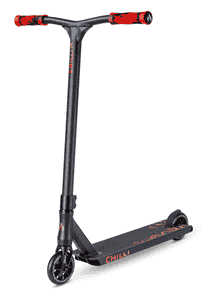

- New
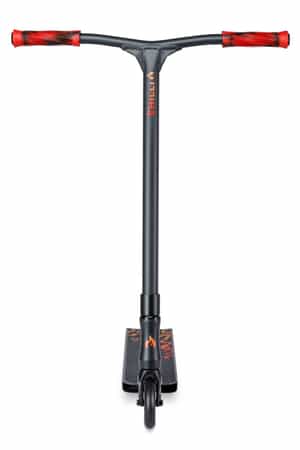
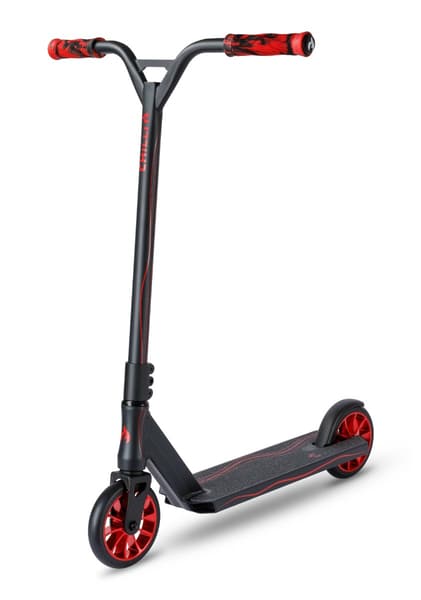
Chilli Pro Scooter Reaper Venom - L - Red The perfect Scooter for hybrid riders- Super-lightweight aluminum T-bar reinforced by a heat treatment
- Devils wings technology for less weight with a 12.5 cm wide Deck
- Innovative Morphing Handlegrips – twist it to fit your perfect grip
CHF 209.90 -
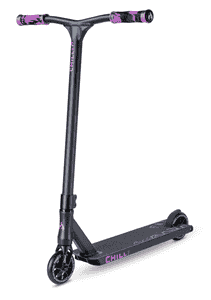
- New
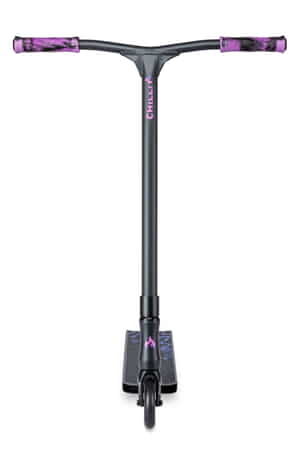
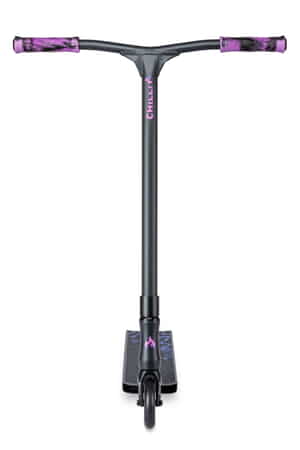
Chilli Pro Scooter Reaper Venom - L - Purple The perfect Scooter for hybrid riders- Super-lightweight aluminum T-bar reinforced by a heat treatment
- Devils wings technology for less weight with a 12.5 cm wide Deck
- Innovative Morphing Handlegrips – twist it to fit your perfect grip
CHF 209.90 -
- New
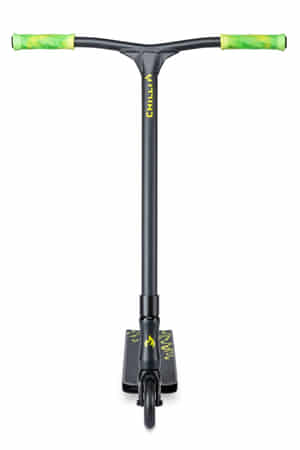
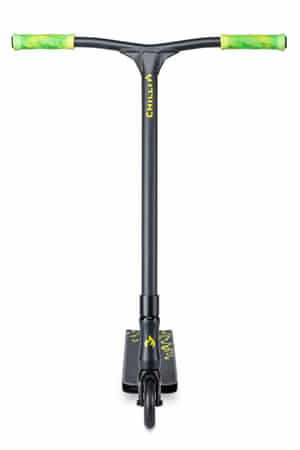
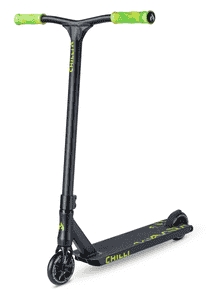
Chilli Pro Scooter Reaper Venom - L - Green The perfect Scooter for hybrid riders- Super-lightweight aluminum T-bar reinforced by a heat treatment
- Devils wings technology for less weight with a 12.5 cm wide Deck
- Innovative Morphing Handlegrips – twist it to fit your perfect grip
CHF 209.90 -
- New
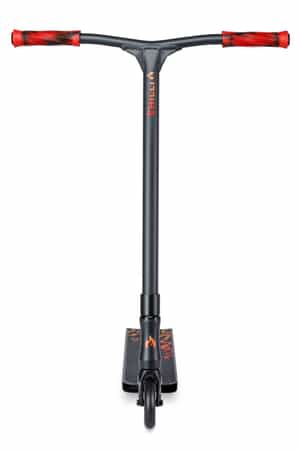
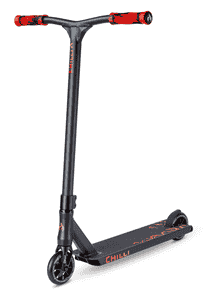
Chilli Pro Scooter Reaper Venom - M - Red The perfect Scooter for hybrid riders- Super-lightweight aluminum T-bar reinforced by a heat treatment
- Devils wings technology for less weight with a 12.5 cm wide Deck
- Innovative Morphing Handlegrips – twist it to fit your perfect grip
CHF 199.90 -
- New
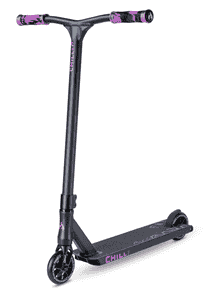
Chilli Pro Scooter Reaper Venom - M - Purple The perfect Scooter for hybrid riders- Super-lightweight aluminum T-bar reinforced by a heat treatment
- Devils wings technology for less weight with a 12.5 cm wide Deck
- Innovative Morphing Handlegrips – twist it to fit your perfect grip
CHF 199.90 -
- New
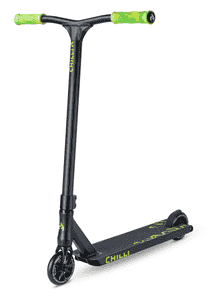
Chilli Pro Scooter Reaper Venom - M - Green The perfect Scooter for hybrid riders- Super-lightweight aluminum T-bar reinforced by a heat treatment
- Devils wings technology for less weight with a 12.5 cm wide Deck
- Innovative Morphing Handlegrips – twist it to fit your perfect grip
CHF 199.90 -
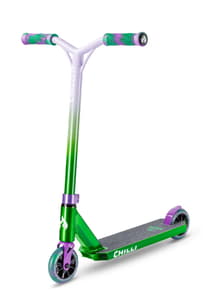
- New
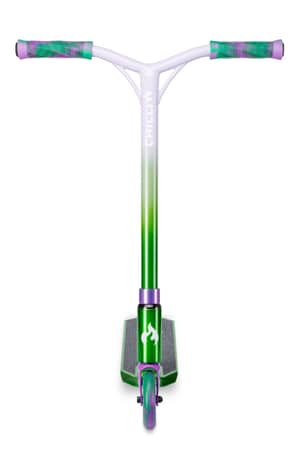
Chilli Pro Scooter Jumpstart - M - Green/Purple Eye-catching design in bright complementary colors- Jumpstart your freestyle journey in bright colors
- Boxed Profile Deck with the perfect width in 11.5 or 12.5 cm
- 110 mm Wheels with ABEC 9 Bearings for extra Speed
CHF 179.90 -
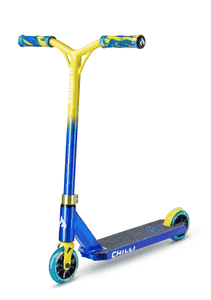
- New
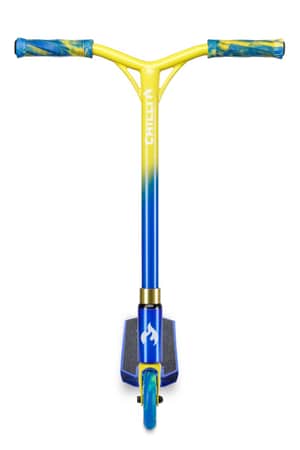
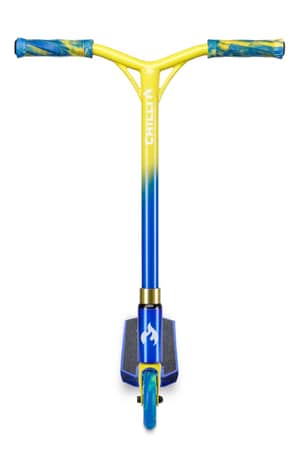
Chilli Pro Scooter Jumpstart - M - Blue/Yellow Eye-catching design in bright complementary colors- Jumpstart your freestyle journey in bright colors
- Boxed Profile Deck with the perfect width in 11.5 or 12.5 cm
- 110 mm Wheels with ABEC 9 Bearings for extra Speed
CHF 179.90 -
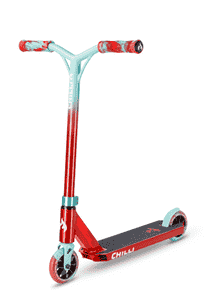
- New
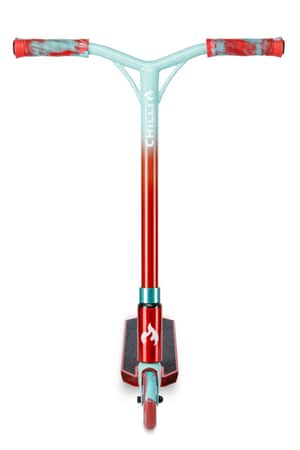
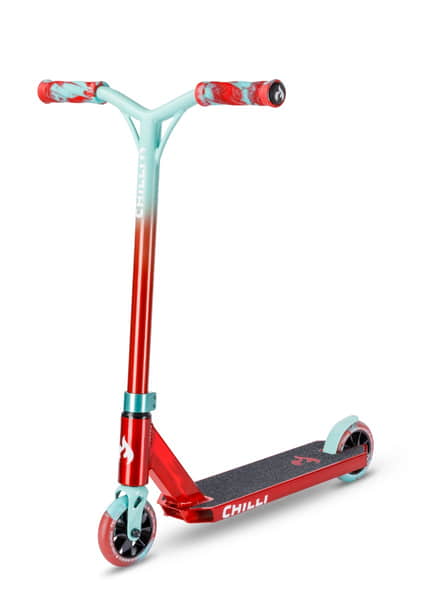
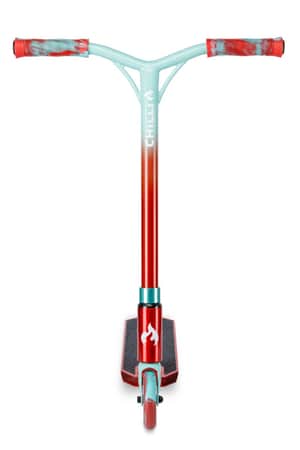
Chilli Pro Scooter Jumpstart M - Red/Teal Eye-catching design in bright complementary colors- Jumpstart your freestyle journey in bright colors
- Boxed Profile Deck with the perfect width in 11.5 or 12.5 cm
- 110 mm Wheels with ABEC 9 Bearings for extra Speed
CHF 179.90 -
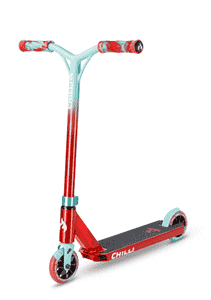
- New
Chilli Pro Scooter Jumpstart S - Red/Teal Eye-catching design in bright complementary colors- Jumpstart your freestyle journey in bright colors
- Boxed Profile Deck with the perfect width in 11.5 or 12.5 cm
- 110 mm Wheels with ABEC 9 Bearings for extra Speed
CHF 169.90 -
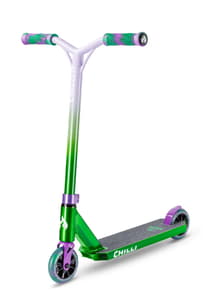
- New
Chilli Pro Scooter Jumpstart - S - Green/Purple Eye-catching design in bright complementary colors- Jumpstart your freestyle journey in bright colors
- Boxed Profile Deck with the perfect width in 11.5 or 12.5 cm
- 110 mm Wheels with ABEC 9 Bearings for extra Speed
CHF 169.90 -
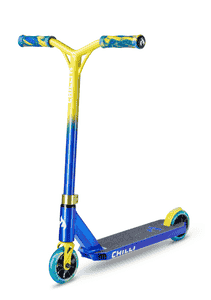
- New
Chilli Pro Scooter Jumpstart - S - Blue/Yellow Eye-catching design in bright complementary colors- Jumpstart your freestyle journey in bright colors
- Boxed Profile Deck with the perfect width in 11.5 or 12.5 cm
- 110 mm Wheels with ABEC 9 Bearings for extra Speed
CHF 169.90 -
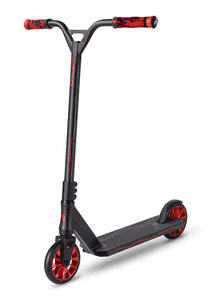
- New
Chilli Pro Scooter Wave Track M - Dark Grey/Red Perfect Scooter for Riding Asphalt Waves- The first ever Pumptrack Scooter
- Heavier than stunt scooters for more speed
- 150 mm to 28 mm wide aluminum wheels for extra speed and grip
CHF 194.90 -
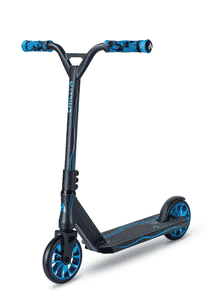
- New
Chilli Pro Scooter Wave Track S - Dark Grey/Blue Perfect Scooter for Riding Asphalt Waves- the first ever Pumptrack Scooter
- Heavier than stunt scooters for more speed
- 150 mm to 28 mm wide aluminum wheels for extra speed and grip
CHF 184.90 -
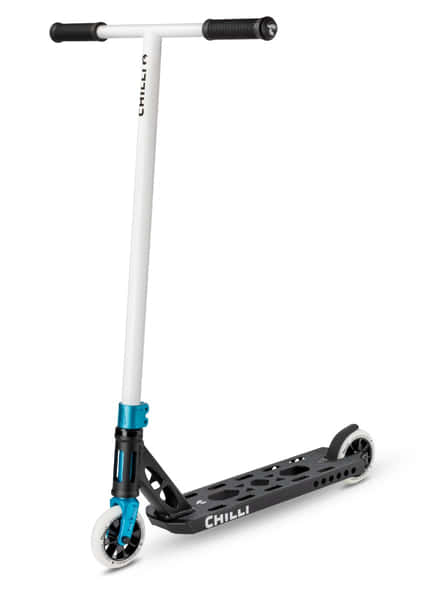
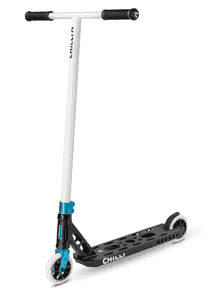 Chilli Pro Scooter Ventus L - White/Black The lightest park scooter for top performance in the air
- The super-lightweight scooter for the freestyle park
- 110 mm aluminium core wheels with ABEC 9 bearings
- Cut out deck with reinforcement crosses for a safe landing
CHF 229.90 -
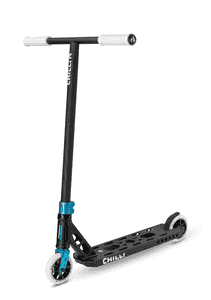 Chilli Pro Scooter Ventus M - Black/White The lightest park scooter for top performance in the air
- The super-lightweight scooter for the freestyle park
- 110 mm aluminium core wheels with ABEC 9 bearings
- Cut out deck with reinforcement crosses for a safe landing
CHF 199.90 -
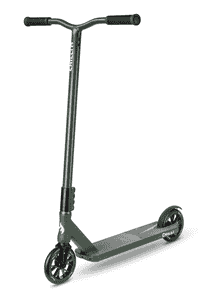 Chilli Pro Scooter Trooper - Green matt/Black The stunt scooter for big riders
- All in one - stunt and city scooter
- 145 mm aluminium core Wheels with ABEC 9 bearings for extra speed
- High set up for big Rider
CHF 279.90 -
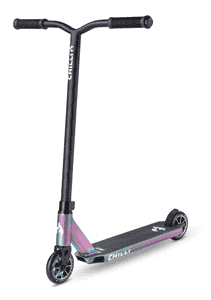 Chilli Pro Scooter Rocky - Matt neochrome The entry level stunt scooter with a matt neochrome finish
- Robust T-bar made of reinforced steel
- Boxy aluminium deck for easy sliding and grinding
- 110mm aluminium core wheels with ABEC 9 bearings and extra high rebound
CHF 179.90 -
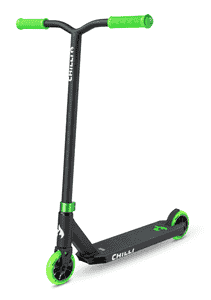 Chilli Pro Scooter Base - Black/Green The perfect entry-level scooter
- Robust strengthened steel T-bar
- Boxy aluminium deck for easy grinding and fingerwhips
- 110mm aluminium core wheels with ABEC 9 bearings
CHF 159.90 -
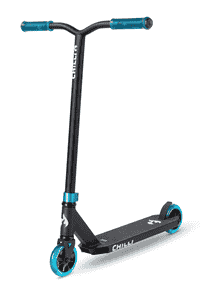 Chilli Pro Scooter Base S - Blue The perfect beginner stunt scooter for the little shredders
- Translucent handgrips and wheels
- Wide boxy aluminum deck for easy grinding
- 110 mm aluminum core wheels with ABEC 9 bearings
CHF 149.90