Stunt Scooter for Beginners vs. Advanced Riders: How to Find the Right Scooter
Many people buy the wrong scooter because they don’t know what to look for. Too cheap, too heavy, or designed for the wrong skill level. Choosing the right setup early helps you learn faster and progress further.
What Is a Stunt Scooter – and What Isn’t?
Stunt Scooter, Kick Scooter, E-Scooter: Three Different Worlds
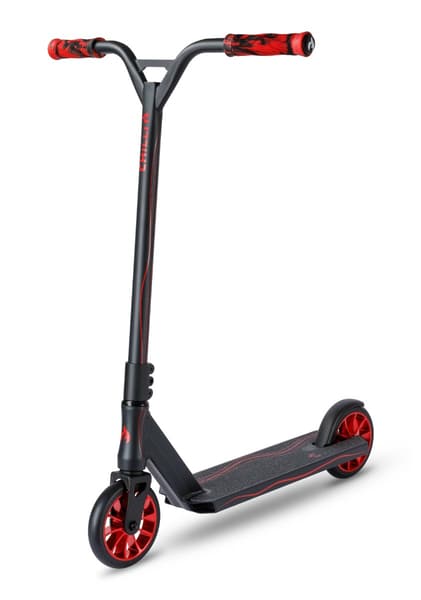
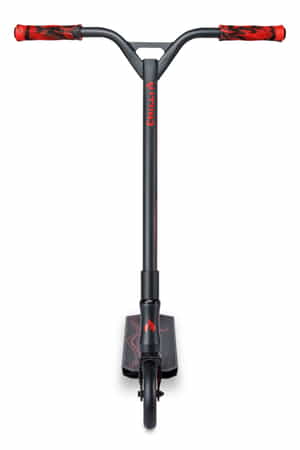
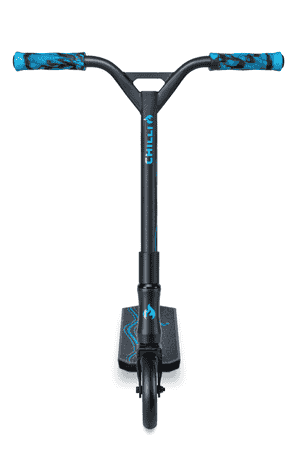
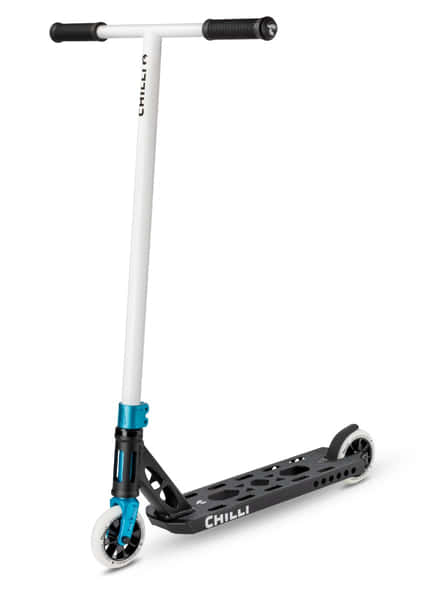
A stunt scooter is a rigid, non-folding scooter specifically built for tricks, jumps, and grinds. The handlebar position is fixed, and the height is not adjustable. This is not a design flaw but intentional: stunt scooters are designed to withstand forces that would destroy a regular kick scooter within minutes.
A folding scooter is meant for getting to school. An e-scooter is a means of transportation. Neither has anything to do with stunt scooters.
Why Stunt Scooters Must Not Be Foldable
Folding mechanisms are the weakest point of any scooter. For normal recreational use, that is sufficient. As soon as you start jumping, grinding ledges, or practicing tricks, forces are applied that no regular kick scooter is designed to handle.
Under these conditions, folding joints fail—sometimes quickly, sometimes gradually, but always dangerously. The lack of handlebar height adjustment follows the same principle: fewer moving parts, fewer potential points of failure.
If you cannot fold your stunt scooter, you do not have an inferior product—you have exactly the right one.
Are You a Beginner or Already Advanced?
Before continuing, it is worth making an honest assessment of your current level. The following criteria can help.
You Are a Beginner If ...
- You have never owned a stunt scooter before.
- You cannot perform intentional tricks yet, apart from simple jumps.
- You ride less than twice per week.
You Are Advanced If ...
- You ride regularly at the skatepark, at least three times per week.
- You have mastered basic tricks such as Tailwhips and Barspins and want to progress further.
- You know that SCS is a compression system.
- You want to select individual components rather than buying a complete scooter.
Depending on where you are in your progression, your scooter will require different features.
Price Ranges: What Do You Get for Your Money?
Entry-Level (Approx. CHF 50–140): Solid Basics, No Overkill
In this price range, you will find scooters with steel components: durable, slightly heavier, but proven for first steps.
As a beginner, you do not need an ultra-light aluminum deck or an SCS compression system. These components will not make a noticeable difference for you yet but significantly increase the price.
A solid complete scooter in this range will do everything you need when starting out.
Mid-Range (Approx. CHF 140–250): When the First Scooter Is No Longer Enough
This is where aluminum and steel begin to be combined. The scooter becomes noticeably lighter, and the compression system and headset are of higher quality.
This category is the right upgrade for riders who ride regularly and have realized that their beginner scooter is limiting their progression.
Pro Scooters (From Approx. CHF 250–300): Why They Often Cost More Than Twice as Much
Professional scooters are made from high-grade aluminum, similar to materials used in aviation.
CNC-machined components offer tighter tolerances, fit together more precisely, and transfer forces more efficiently. The result is a scooter that remains stable under extreme loads while still feeling exceptionally light.
Weight becomes critical for professional tricks. During maneuvers where the scooter rotates multiple times, every gram makes a measurable difference. Beginners barely notice this. Professionals notice it immediately.
Another advantage is modularity: worn parts can be replaced individually, and upgrades are possible. In the long term, a high-quality scooter that is properly maintained is often cheaper than buying multiple low-cost scooters that need complete replacement.
The Most Important Buying Criteria Compared
Weight: Why One Extra Kilogram Makes a Difference
For beginners, a weight between 3.0 and 3.6 kg is normal and completely sufficient.
Advanced riders and professionals ideally ride scooters under 3 kg, while top setups weigh less than 2.5 kg.
Lower weight allows faster rotations and more precise trick execution. For beginners, a slightly heavier setup can actually be beneficial because it offers greater control and is more forgiving.
Material: Aluminum or Steel?
Aluminum is lighter, more expensive, and has less rotational inertia during spin tricks.
Steel is more durable, more affordable, and heavier.
The ideal material depends on the component. Decks and forks benefit most from aluminum because weight matters most there. Steel handlebars are acceptable for many riders because weight higher up has less impact on the rotational axis.
Professional custom setups often combine both materials strategically.
Handlebar Height: How Tall Should It Be?
The general rule is: handlebar height should be around your belly button when standing.
A handlebar that is too short forces you into a hunched posture and makes tricks harder. One that is too tall reduces control and requires more effort.
Rider Height and Recommended Handlebar Height
|
Rider Height |
Handlebar Height |
|
Up to 130 cm |
65–76 cm |
|
130–150 cm |
76–84 cm |
|
150–170 cm |
85 cm+ |
|
170 cm+ |
85 cm+ |
Deck Dimensions: Length and Width Based on Riding Style
Decks range from 43 to 58 cm in length and 10 to 15 cm in width.
For park riders who spend a lot of time in the air and require precise tricks, shorter and narrower decks are generally the better choice.
Riders who prefer street riding or a wider stance typically choose longer and wider decks.
Beginners are usually best served by medium-sized decks, which provide sufficient foot space without sacrificing maneuverability.
Complete Scooter or Custom Setup?
Complete Scooters: Why Beginners Should Choose Them
A complete scooter comes fully assembled with components that are designed to work together.
There are no compatibility concerns, no technical knowledge required, and the value for money is significantly better in the beginner segment than with custom builds.
If you are just starting and do not yet know exactly what you want, buy a complete scooter.
Custom Setups: When It Makes Sense
Custom setups only become worthwhile once you have specific requirements.
Which deck dimensions do you want? Which compression system? What target weight?
Compatibility between the fork, headset, and compression system must be correct, and that is not always straightforward.
Advanced riders and professionals ride almost exclusively customized scooters because no complete scooter can satisfy every specific requirement.
When Is the Right Time to Upgrade?
An upgrade becomes worthwhile when:
- You regularly tighten bolts and replace parts.
- You feel that the scooter is holding back your progression.
- You are practicing tricks where weight and precision make a noticeable difference.
If these points do not yet apply to you, you probably do not need an upgrade.
Technology You Should Know
Compression Systems: ICS, HIC, and SCS Explained Simply
The compression system connects the handlebar, fork, and deck.
There are three relevant systems:
- ICS (Inverted Compression System): Simple, affordable, and easy to install.
- HIC (Hidden Internal Compression): More robust and widely used in the mid-range segment.
- SCS (Standard Compression System): The professional standard, highly durable under heavy loads, featuring a four-bolt clamp and a significantly stronger construction.
Beginners rarely notice the difference. Riders performing demanding tricks quickly understand why SCS dominates the professional scene.
Wheels: 100 mm vs. 110 mm
100 mm wheels are lighter, keep the deck lower to the ground, and are commonly used by beginners.
110 mm wheels offer more grip and better comfort on rough surfaces.
For park riders who spend a lot of time airborne, 110 mm wheels are often the better option. Riders using varied outdoor terrain also benefit from the balance they provide.
120 mm wheels are often used on street-oriented models.
145 mm and larger wheels are typically found on specialty scooters such as pump track scooters.
Aluminum Core vs. Plastic Core
The wheel core absorbs and transfers forces.
An aluminum core is lighter and significantly more durable.
Plastic cores are cheaper but wear out faster under heavy use.
On professional scooters, aluminum cores are standard.
ABEC 7 vs. ABEC 9 Bearings: What’s the Difference?
ABEC stands for the Annular Bearing Engineering Committee.
The ABEC scale measures manufacturing tolerances in bearings. The higher the number, the tighter the tolerance and the greater the precision.
- ABEC 7 tolerance: 0.004 mm
- ABEC 9 tolerance: 0.003 mm
In practice:
- ABEC 7 bearings are more durable, easier to maintain, and the standard choice for beginners.
- ABEC 9 bearings roll faster and more precisely but require regular lubrication and maintenance.
For advanced riders whose bearings become a performance bottleneck, ABEC 9 is the right choice.
Forks and Headsets: Beginner vs. Professional Standards
Threaded forks are the more affordable option and are perfectly adequate for beginners.
From the mid-range segment onward, threadless forks become standard because they are lighter, stiffer, and more precise.
The headset is the bearing system between the fork and deck.
There are three main types:
- Threaded
- Threadless
- Integrated
The important factor is compatibility with the fork. Everything else is a technical detail.
Pegs: Yes or No?
Pegs are metal cylinders mounted on the axle that allow grinds and stall tricks.
For beginners, pegs add weight without providing much immediate benefit because the associated tricks are not yet relevant.
Once you begin practicing stalls and grinds, pegs become a worthwhile addition.
Trick Progression: How Your Skill Level Determines the Right Scooter
Beginner Tricks: What Your Scooter Needs
Bunny Hops, Manuals, and Fakies place no special demands on the setup.
A solid complete scooter is entirely sufficient.
Only when Tailwhips and Barspins become part of your repertoire do weight and handlebar responsiveness start to matter.
The handlebar must rotate freely, and the scooter cannot be excessively heavy. This is the point where many riders realize their beginner scooter has limitations.
Advanced and Professional Tricks
Double Whips, 720s, and complex combinations require a setup that responds quickly in the air.
Every gram matters.
At this level, a custom setup is no longer a luxury but a sensible investment in faster progression.
Trying to learn professional-level tricks on a beginner scooter means fighting against your equipment.
Getting Started at the Skatepark and Joining the Community
Where Should Beginners Ride?
The fastest way to improve is at the skatepark.
Online videos help you understand tricks, but tricks are learned in the park: with direct feedback, other riders, and real obstacles.
Outdoor skateparks are free in most cities.
Indoor parks allow riding regardless of weather and often have active local communities that welcome beginners.
Protective Equipment: What Is Essential?
The Swiss Council for Accident Prevention (BFU) recommends a properly fitted helmet as well as knee pads, elbow pads, and wrist guards for wheeled sports.
The helmet is non-negotiable.
Knee and elbow pads are especially useful for beginners while falls are still difficult to anticipate.
Gloves are optional but can be a good addition during long sessions on rough surfaces.
Chilli Pro Scooter: The Right Model for Every Skill Level
Why We Build Models for Beginners and Professionals
Our range covers everything from a first complete scooter for kids to competition-ready setups for experienced riders.
No rider needs to change brands as their skills improve.
Product Range Overview
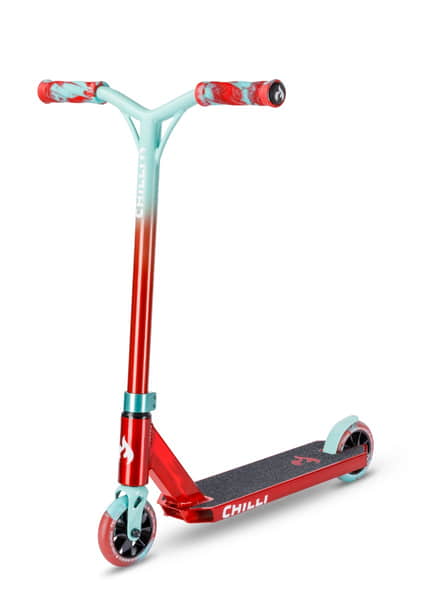
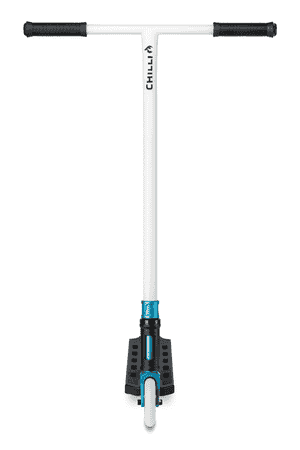
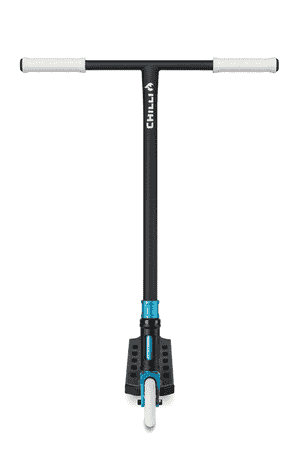
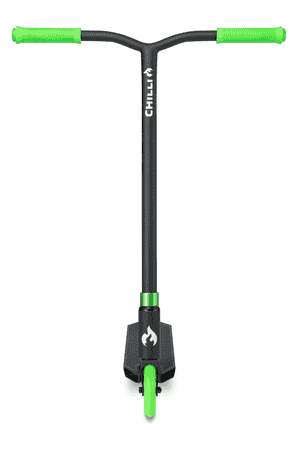
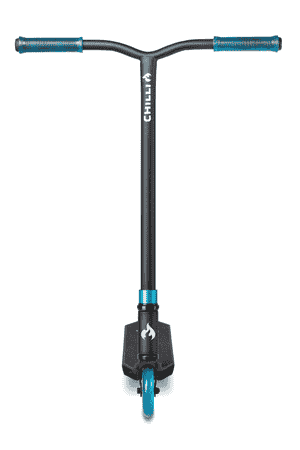
For beginners, the Chilli Base and Jumpstart are ready-to-ride complete scooters featuring a 6061 aluminum deck, 110 mm wheels with aluminum cores, and an HIC compression system.
Everything is matched and compatible—no technical knowledge required.
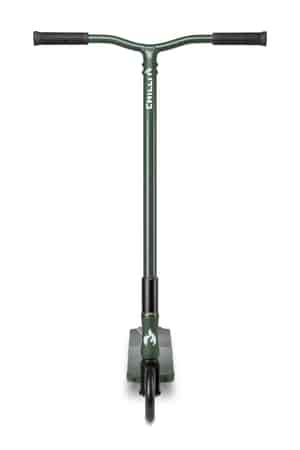
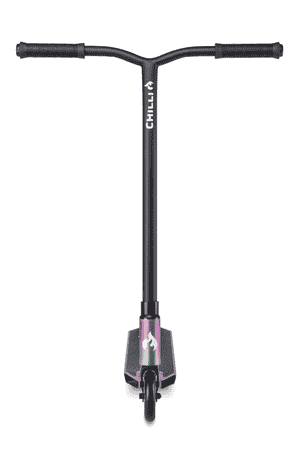
In the mid-range segment, the Chilli Critter Series, Reaper, and Reaper Venom bridge the gap between beginner and advanced levels. They are noticeably lighter than entry-level models and offer aluminum components with upgrade potential.
For advanced riders and professionals, models such as the Chilli Ventus and Chilli Beast are available. They are custom-ready, weigh less than 3 kg, and are compatible with SCS systems.
Maintenance and Care
Lubricate and clean bearings regularly.
Avoid prolonged exposure to rain without proper drying afterward.
Monitor wear items such as grips, wheels, and bearings, and replace them promptly when necessary.
Our website also features a dedicated tutorial section for maintenance and repairs.
Conclusion: Know Your Level, Understand the Criteria, Buy the Right Scooter
The right scooter depends on your skill level.
Beginners need a solid complete scooter that allows them to learn the fundamentals—not a professional setup that will only become relevant years later.
Riders who practice regularly and feel held back by their equipment should upgrade.
Those aiming to learn Double Whips and 720s will benefit from a custom setup.
We offer the right model for every level. Explore the full range at Chilli Pro Scooter.
-
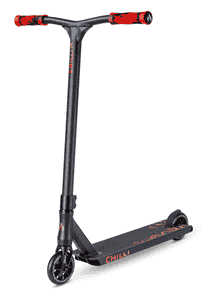

- New
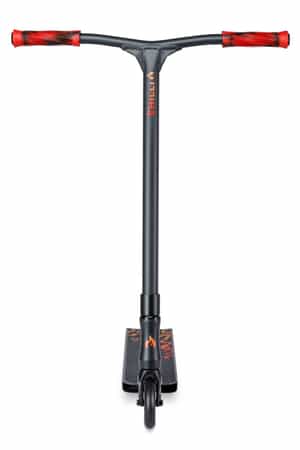
Chilli Pro Scooter Reaper Venom - L - Red The perfect Scooter for hybrid riders- Super-lightweight aluminum T-bar reinforced by a heat treatment
- Devils wings technology for less weight with a 12.5 cm wide Deck
- Innovative Morphing Handlegrips – twist it to fit your perfect grip
CHF 209.90 -
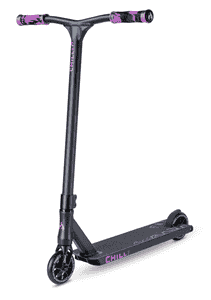
- New
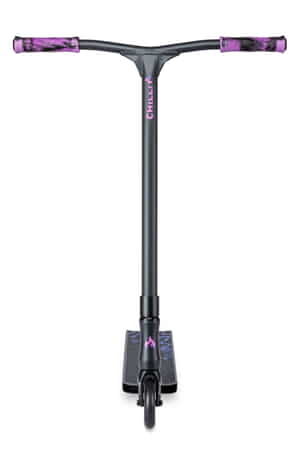
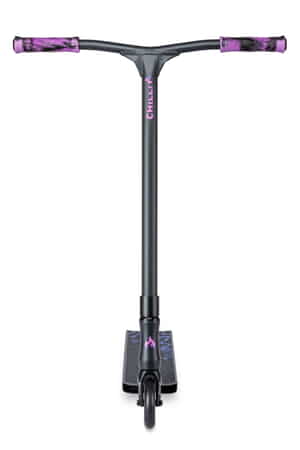
Chilli Pro Scooter Reaper Venom - L - Purple The perfect Scooter for hybrid riders- Super-lightweight aluminum T-bar reinforced by a heat treatment
- Devils wings technology for less weight with a 12.5 cm wide Deck
- Innovative Morphing Handlegrips – twist it to fit your perfect grip
CHF 209.90 -
- New
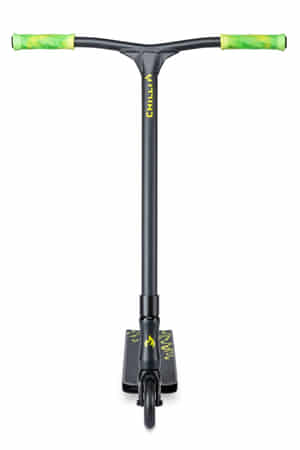
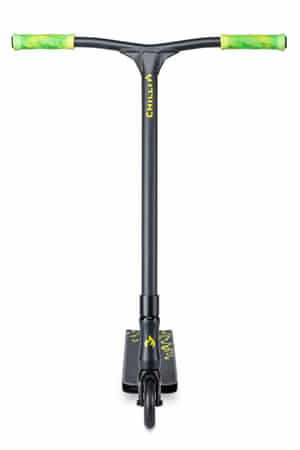
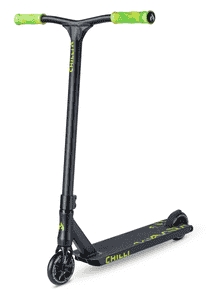
Chilli Pro Scooter Reaper Venom - L - Green The perfect Scooter for hybrid riders- Super-lightweight aluminum T-bar reinforced by a heat treatment
- Devils wings technology for less weight with a 12.5 cm wide Deck
- Innovative Morphing Handlegrips – twist it to fit your perfect grip
CHF 209.90 -
- New
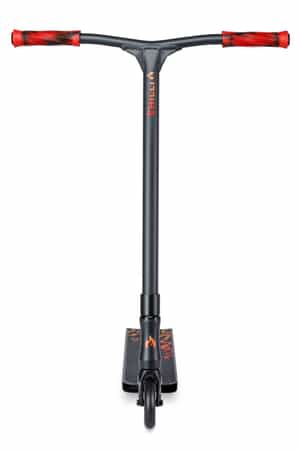
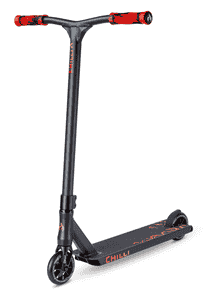
Chilli Pro Scooter Reaper Venom - M - Red The perfect Scooter for hybrid riders- Super-lightweight aluminum T-bar reinforced by a heat treatment
- Devils wings technology for less weight with a 12.5 cm wide Deck
- Innovative Morphing Handlegrips – twist it to fit your perfect grip
CHF 199.90 -
- New
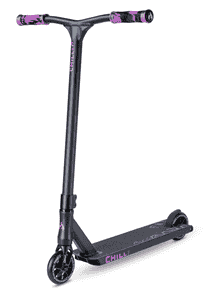
Chilli Pro Scooter Reaper Venom - M - Purple The perfect Scooter for hybrid riders- Super-lightweight aluminum T-bar reinforced by a heat treatment
- Devils wings technology for less weight with a 12.5 cm wide Deck
- Innovative Morphing Handlegrips – twist it to fit your perfect grip
CHF 199.90 -
- New
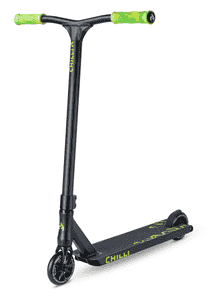
Chilli Pro Scooter Reaper Venom - M - Green The perfect Scooter for hybrid riders- Super-lightweight aluminum T-bar reinforced by a heat treatment
- Devils wings technology for less weight with a 12.5 cm wide Deck
- Innovative Morphing Handlegrips – twist it to fit your perfect grip
CHF 199.90 -
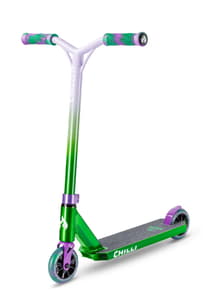
- New
Chilli Pro Scooter Jumpstart - M - Green/Purple Eye-catching design in bright complementary colors- Jumpstart your freestyle journey in bright colors
- Boxed Profile Deck with the perfect width in 11.5 or 12.5 cm
- 110 mm Wheels with ABEC 9 Bearings for extra Speed
CHF 179.90 -
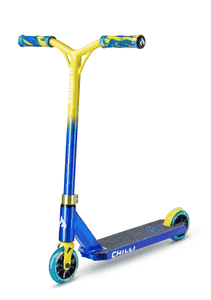
- New
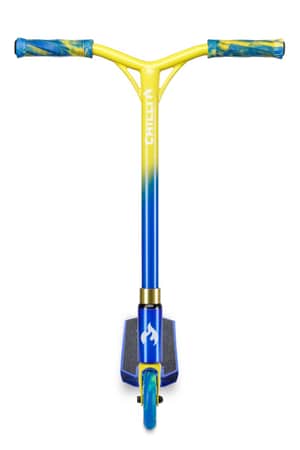
Chilli Pro Scooter Jumpstart - M - Blue/Yellow Eye-catching design in bright complementary colors- Jumpstart your freestyle journey in bright colors
- Boxed Profile Deck with the perfect width in 11.5 or 12.5 cm
- 110 mm Wheels with ABEC 9 Bearings for extra Speed
CHF 179.90 -
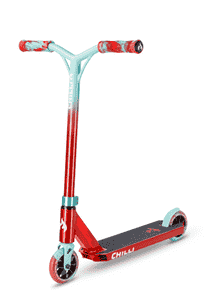
- New
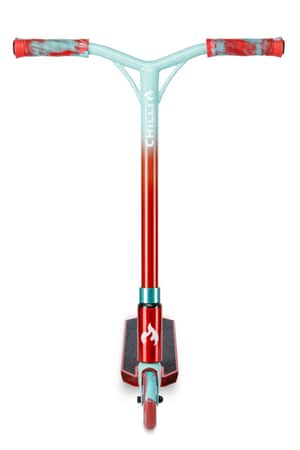
Chilli Pro Scooter Jumpstart M - Red/Teal Eye-catching design in bright complementary colors- Jumpstart your freestyle journey in bright colors
- Boxed Profile Deck with the perfect width in 11.5 or 12.5 cm
- 110 mm Wheels with ABEC 9 Bearings for extra Speed
CHF 179.90 -
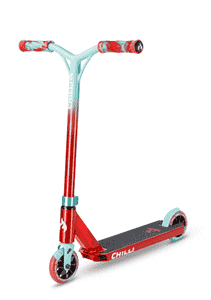
- New
Chilli Pro Scooter Jumpstart S - Red/Teal Eye-catching design in bright complementary colors- Jumpstart your freestyle journey in bright colors
- Boxed Profile Deck with the perfect width in 11.5 or 12.5 cm
- 110 mm Wheels with ABEC 9 Bearings for extra Speed
CHF 169.90 -
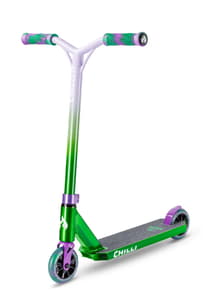
- New
Chilli Pro Scooter Jumpstart - S - Green/Purple Eye-catching design in bright complementary colors- Jumpstart your freestyle journey in bright colors
- Boxed Profile Deck with the perfect width in 11.5 or 12.5 cm
- 110 mm Wheels with ABEC 9 Bearings for extra Speed
CHF 169.90 -
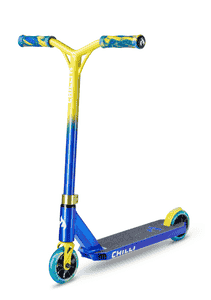
- New
Chilli Pro Scooter Jumpstart - S - Blue/Yellow Eye-catching design in bright complementary colors- Jumpstart your freestyle journey in bright colors
- Boxed Profile Deck with the perfect width in 11.5 or 12.5 cm
- 110 mm Wheels with ABEC 9 Bearings for extra Speed
CHF 169.90 -
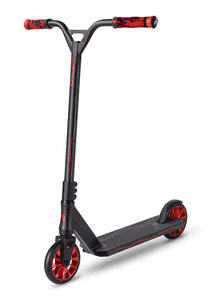
- New
Chilli Pro Scooter Wave Track M - Dark Grey/Red Perfect Scooter for Riding Asphalt Waves- The first ever Pumptrack Scooter
- Heavier than stunt scooters for more speed
- 150 mm to 28 mm wide aluminum wheels for extra speed and grip
CHF 194.90 -
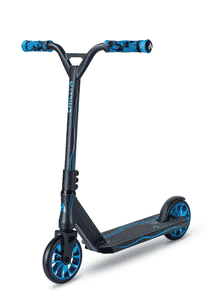
- New
Chilli Pro Scooter Wave Track S - Dark Grey/Blue Perfect Scooter for Riding Asphalt Waves- the first ever Pumptrack Scooter
- Heavier than stunt scooters for more speed
- 150 mm to 28 mm wide aluminum wheels for extra speed and grip
CHF 184.90 -
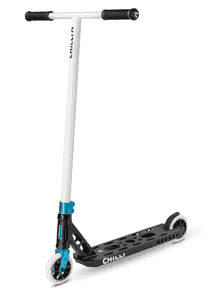 Chilli Pro Scooter Ventus L - White/Black The lightest park scooter for top performance in the air
- The super-lightweight scooter for the freestyle park
- 110 mm aluminium core wheels with ABEC 9 bearings
- Cut out deck with reinforcement crosses for a safe landing
CHF 229.90 -
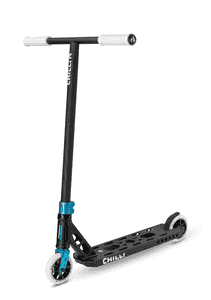 Chilli Pro Scooter Ventus M - Black/White The lightest park scooter for top performance in the air
- The super-lightweight scooter for the freestyle park
- 110 mm aluminium core wheels with ABEC 9 bearings
- Cut out deck with reinforcement crosses for a safe landing
CHF 199.90 -
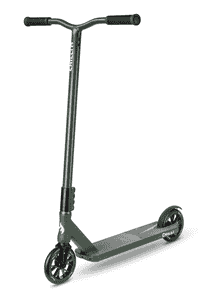 Chilli Pro Scooter Trooper - Green matt/Black The stunt scooter for big riders
- All in one - stunt and city scooter
- 145 mm aluminium core Wheels with ABEC 9 bearings for extra speed
- High set up for big Rider
CHF 279.90 -
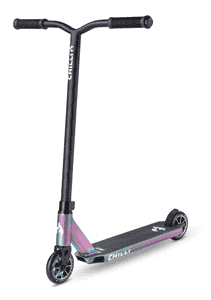 Chilli Pro Scooter Rocky - Matt neochrome The entry level stunt scooter with a matt neochrome finish
- Robust T-bar made of reinforced steel
- Boxy aluminium deck for easy sliding and grinding
- 110mm aluminium core wheels with ABEC 9 bearings and extra high rebound
CHF 179.90 -
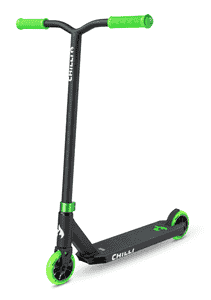 Chilli Pro Scooter Base - Black/Green The perfect entry-level scooter
- Robust strengthened steel T-bar
- Boxy aluminium deck for easy grinding and fingerwhips
- 110mm aluminium core wheels with ABEC 9 bearings
CHF 159.90 -
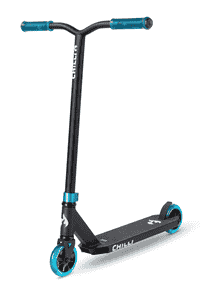 Chilli Pro Scooter Base S - Blue The perfect beginner stunt scooter for the little shredders
- Translucent handgrips and wheels
- Wide boxy aluminum deck for easy grinding
- 110 mm aluminum core wheels with ABEC 9 bearings
CHF 149.90